Subsidy applications and on-farm inspections fail more often from missing records than from bad farming. If you cannot show what was planted where, which inputs were used, and what it cost, you lose time, money, and credibility—even when production was fine.
This guide covers the farm records inspectors and funding bodies typically expect, a practical filing system, and how AgroProfit helps small farms stay audit-ready without paper chaos.
Why Subsidy and Inspection Records Matter
Good records help you:
- Prove eligibility for subsidies and support schemes
- Survive pesticide, fertilizer, and cross-compliance checks
- Answer bank and insurer questions with evidence
- Defend organic or quality certification claims
- Make better decisions using the same data
Farms that treat records as “paperwork after the fact” scramble before deadlines. Farms that log work as it happens are ready in minutes.
Core Records Most Farms Should Keep
1. Field and Crop History
- Parcel identification and area
- Crop and variety by season
- Planting and harvest dates
- Yields per field
2. Input Applications
- Fertilizer product, rate, date, field
- Plant protection product, dose, target, weather notes
- Seed lots and seeding rates
- Operator name where required
3. Cost and Purchase Evidence
- Invoices for seeds, fertilizers, chemicals, fuel
- Allocation of costs to fields/crops
- Storage and inventory movements
4. Income and Sales
- Harvest quantities
- Buyer, date, price, quality deductions
- Storage losses if relevant
5. Operations Log
- Tillage, planting, spraying, harvest, transport
- Machine hours and labor where claimed
A Simple Audit-Ready System
- One digital source of truth—not five notebooks and three USB sticks
- Same-day entry after field work
- Field-first structure—every action belongs to a parcel
- Document attachments—keep invoice references with purchases
- Exportable reports—PDF/Excel for officials and accountants
- Season archive—lock last year; do not overwrite history
Common Reasons Farms Fail Checks
- Spray logs incomplete or missing weather/conditions
- Field areas in records do not match maps or declarations
- Purchases exist but applications do not (or the reverse)
- Excel versions conflict (“final_v7_really_final.xlsx”)
- Records reconstructed from memory the night before inspection
How Digital Farm Software Helps
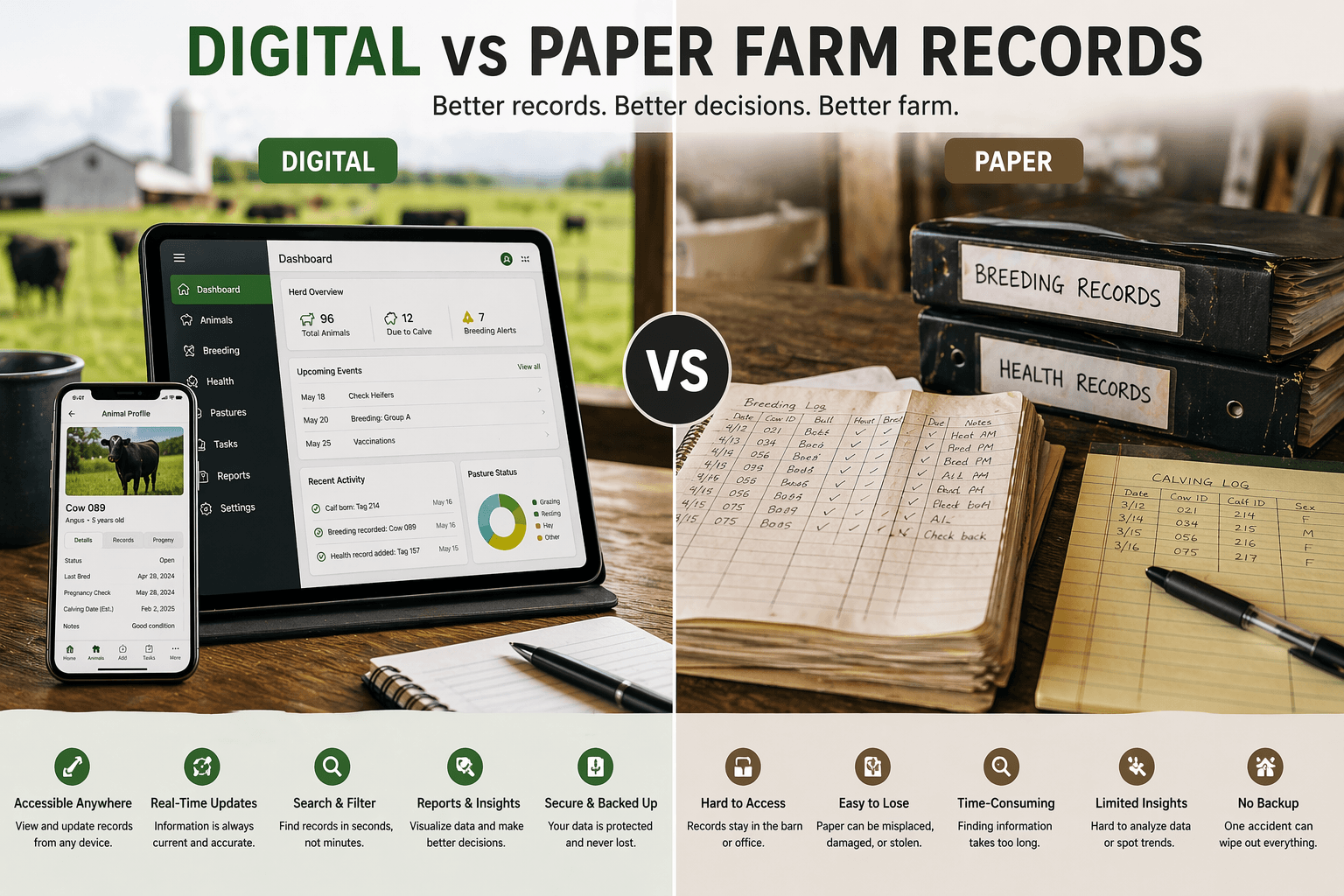
Paper can work for tiny operations. As soon as you have multiple fields and seasons, digital records reduce risk:
- Applications automatically reduce inventory
- Costs stay tied to the correct field
- History is searchable by crop, date, and parcel
- Exports are consistent and professional
AgroProfit centralizes field expenses, income, maps, and reports so subsidy and inspection prep becomes export-and-review—not reconstruct-and-hope.
30-Day Readiness Plan
- Week 1: Digitize field list and current crop map
- Week 2: Enter all purchases and opening inventory
- Week 3: Backfill key sprays/fertilizer events for the season
- Week 4: Export a sample cost and operations report; fix gaps
After that, maintain same-day logging. Future inspections become routine.
FAQ
Do I need software for subsidy records?
Not legally in every case—but software dramatically reduces missing-data risk and speeds report generation.
What if my records are only on paper today?
Start digital from today forward, then backfill the current season’s critical spray and fertilizer logs. Do not wait for a perfect historical archive.
How does this improve profit too?
The same records that satisfy inspectors reveal which fields are expensive or unprofitable—so compliance work also becomes management insight.
Get Audit-Ready with AgroProfit
Start your free 60-day AgroProfit trial and build inspection-ready field records while tracking real costs and profit.
Start Free Trial – Farm Records Ready for Subsidies & Inspections