Broken equipment during planting or harvest can cost thousands in lost time, missed windows, and emergency repairs. Yet many small farms treat maintenance as reactive—fixing machines only when they fail. A planned maintenance approach reduces downtime, extends equipment life, and cuts repair costs by 20-40%.
This guide covers preventive maintenance schedules, cost tracking, and best practices for tractors, combines, sprayers, and other farm machinery on small and medium farms.
Why Farm Equipment Maintenance Matters
Equipment is one of the largest investments on a farm. Poor maintenance leads to:
- Unexpected breakdowns: A failed tractor during planting can delay operations by days
- Higher repair costs: Emergency repairs cost 2-3x more than planned maintenance
- Reduced resale value: Poorly maintained equipment sells for less
- Safety risks: Worn brakes, hydraulics, or PTO components cause accidents
- Fuel waste: Poorly tuned engines consume 10-15% more fuel
For small farms with limited backup equipment, a single breakdown can halt the entire operation. Preventive maintenance is not optional—it is essential.
Types of Farm Equipment Maintenance
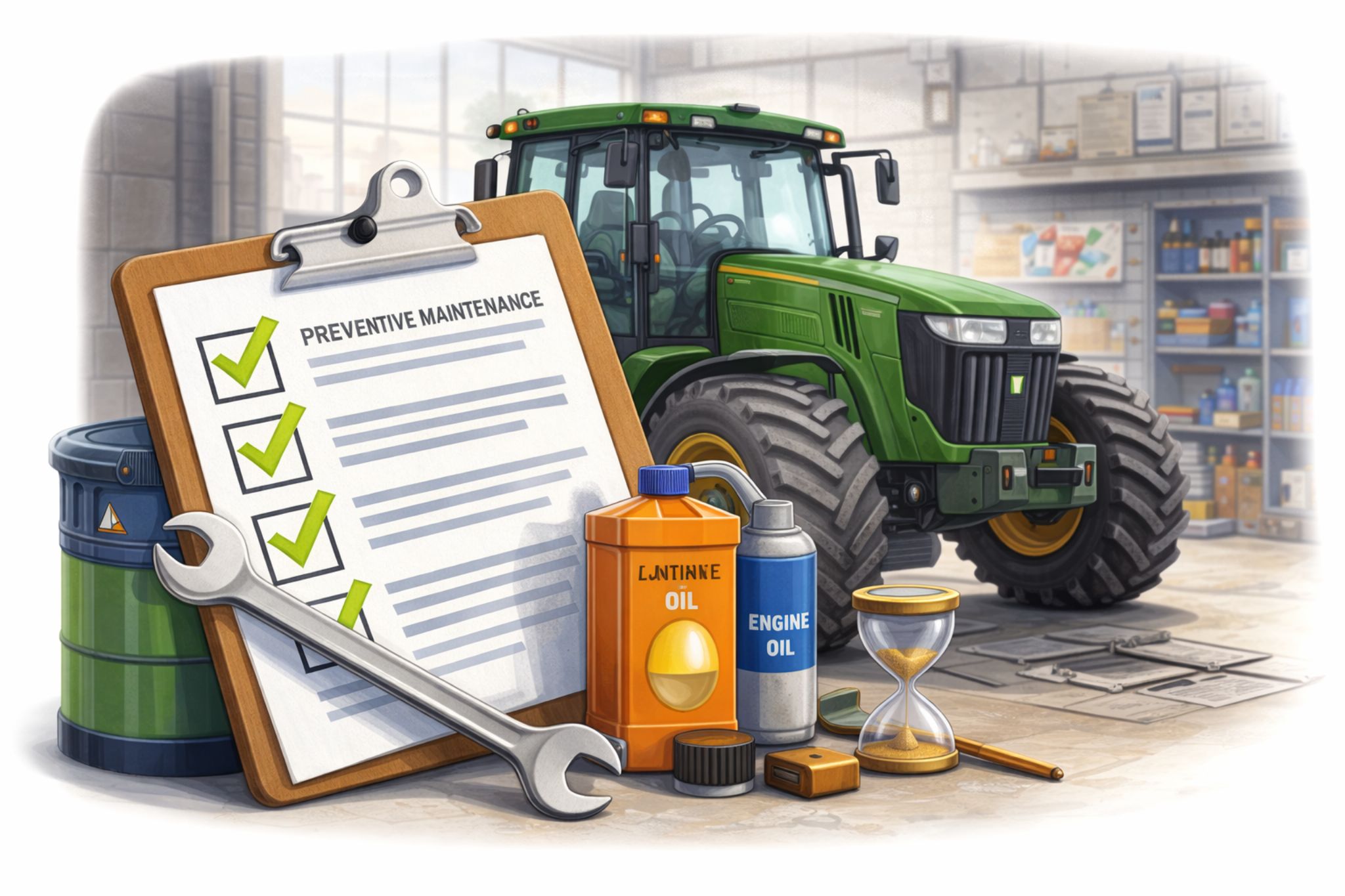
1. Preventive Maintenance
Scheduled maintenance performed before problems occur: oil changes, filter replacements, belt inspections, and lubrication. This is the foundation of equipment care.
2. Predictive Maintenance
Monitoring equipment condition through hours logged, vibration, oil analysis, or visual wear. Replace parts before they fail based on data, not guesswork.
3. Corrective Maintenance
Repairs after a failure occurs. Minimize this by investing in preventive and predictive maintenance.
Essential Maintenance Schedule by Equipment
Tractors
- Daily: Check fluids, tire pressure, lights, and leaks
- Every 50-100 hours: Grease fittings, check air filter, inspect belts
- Every 250-500 hours: Oil and filter change, hydraulic fluid check, coolant check
- Seasonally: Full inspection before planting and harvest
Combines and Harvesters
- Before harvest: Inspect chains, belts, concaves, sieves, and sensors
- Daily during harvest: Clean grain and chaff buildup, check knife sharpness
- After harvest: Deep clean, lubricate, store properly
Sprayers and Spreaders
- Before season: Calibrate nozzles, check pumps, hoses, and filters
- After each use: Flush system, prevent chemical corrosion
- Annually: Replace worn nozzles, test pressure gauges
Implements (Plows, Cultivators, Planters)
- Before use: Inspect wear parts, bearings, and depth settings
- After season: Replace worn blades or discs, grease bearings, store dry
How to Track Equipment Maintenance and Costs
Tracking maintenance is as important as performing it. Without records, you forget what was done, when, and how much it cost.
What to Record for Each Machine
- Equipment name and serial number
- Engine hours or mileage
- Maintenance date and type (oil change, repair, inspection)
- Parts replaced and costs
- Labor (your time or mechanic fees)
- Next scheduled service date or hour mark
Track Costs Per Machine
Knowing total cost per tractor or combine helps you decide when to repair vs. replace. Calculate:
- Annual maintenance cost per machine
- Cost per operating hour (total cost ÷ hours used)
- Repair trend: Are costs rising year over year?
When maintenance costs exceed 50% of replacement value annually, it may be time to upgrade.
Link Maintenance to Field Operations
Connect equipment usage to field work. If a tractor logged 200 hours on Field A, allocate fuel and maintenance costs to that field for accurate profit analysis.
Farm management software like AgroProfit tracks equipment expenses alongside field operations, so you see the true cost of mechanization per field and crop.
Seasonal Maintenance Checklist
Spring (Pre-Planting)
- Service all tractors and planters
- Calibrate sprayers and spreaders
- Check tire condition and ballast
- Test GPS and guidance systems
- Stock common spare parts (filters, belts, fuses)
Summer (Growing Season)
- Daily visual checks during peak use
- Monitor engine temperatures and hydraulics
- Keep air filters clean in dusty conditions
- Log hours and fuel consumption
Fall (Harvest)
- Pre-harvest combine inspection and setup
- Prepare grain carts and transport equipment
- Check drying and storage equipment
- Have backup parts ready for critical components
Winter (Off-Season)
- Deep service all major equipment
- Repair and rebuild worn components
- Clean, lubricate, and store properly
- Plan next season's maintenance budget
Reducing Equipment Maintenance Costs
1. Buy Quality Filters and Fluids
Cheap filters and oil cause premature wear. Use manufacturer-recommended products—they cost more upfront but save on repairs.
2. Train Operators
Proper operation reduces wear. Train workers on warm-up procedures, correct gear usage, and daily checks.
3. Keep Equipment Clean
Mud, crop residue, and dust accelerate corrosion and hide leaks. Clean machines regularly, especially after harvest.
4. Maintain a Spare Parts Inventory
Stock filters, belts, and common wear items. Waiting for parts during peak season costs more than stocking them in advance.
5. Track and Analyze Costs
Review maintenance spending annually. Identify machines that cost disproportionately and decide whether to repair, rebuild, or replace.
Common Equipment Maintenance Mistakes
- Skipping daily checks: Small issues become major failures
- Using wrong fluids: Wrong hydraulic or engine oil damages components
- Ignoring hour meters: Maintenance intervals are based on hours, not calendar dates
- No maintenance records: You repeat mistakes and miss scheduled services
- Deferred repairs: A $50 fix today becomes a $2,000 repair tomorrow
- Not budgeting for maintenance: Maintenance is a predictable cost—plan for it
Equipment Maintenance vs. Farm Profitability
Maintenance costs are part of your cost per hectare. When you track them properly, you can:
- See which fields require more mechanization
- Compare owned vs. custom-hire economics
- Build accurate budgets for next season
- Justify equipment purchases with real data
Without tracking, maintenance costs hide in general expenses and distort your profit per field calculations.
Tools for Equipment Maintenance Tracking
Paper Logbooks
Traditional but easy to lose and hard to analyze across multiple machines.
Spreadsheets
Better for records, but disconnected from field operations and other farm costs.
Farm Management Software
AgroProfit lets you log equipment expenses, track mechanization costs per field, and see how maintenance affects your overall farm profitability—all in one place.
Getting Started with Equipment Maintenance Planning
- Inventory your equipment: List all machines with hours, age, and condition
- Create maintenance schedules: Set intervals based on manufacturer recommendations
- Start logging: Record every service, repair, and cost
- Set reminders: Use hour meters and calendar alerts for upcoming services
- Review annually: Analyze costs and adjust your maintenance plan
Start your free 60-day AgroProfit trial and begin tracking equipment costs alongside field operations. See the true cost of mechanization and make smarter equipment decisions.
Conclusion
Planned equipment maintenance saves money, reduces downtime, and keeps your farm running during critical seasons. Start with a simple schedule, log every service and cost, and review your data annually. Combined with field-level cost tracking, maintenance records help you run a more profitable and reliable farm operation.